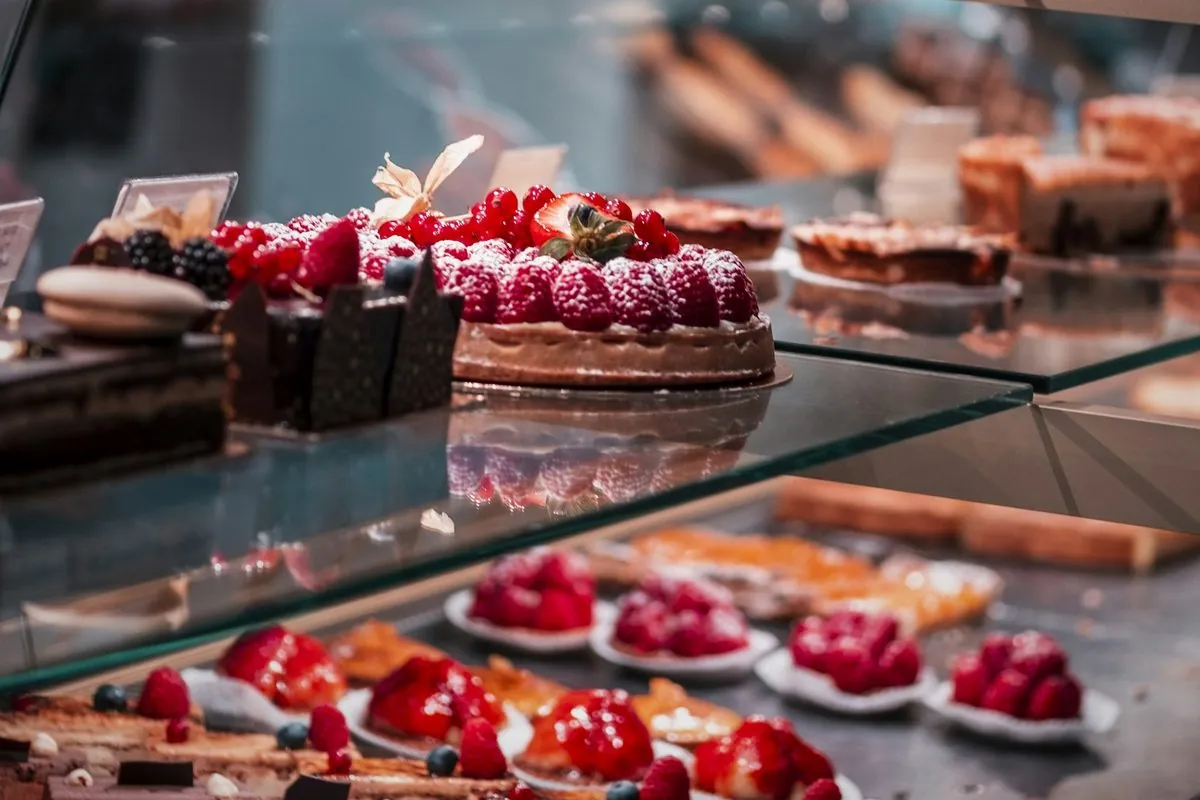
Why Facebook isn’t enough for a cake shop
Facebook and Instagram are great for a cake shop; you show your everyday work there and the people who already follow you can see what you can do. The problem is everyone else. People who don’t know you yet aren’t looking for you on Facebook. They type “custom cakes Brno” into Google, and what comes up are the people who have a website and a Google profile.
The second thing is being findable. On a social profile your offer is scattered across posts from two years ago. The customer can’t find prices and doesn’t know how far in advance to order, so they write to you. Or they don’t bother. A website keeps all of that in one place, clearly and permanently. And most of all: the website is yours, while the reach of a social profile can drop overnight.
Step 1: What a cake shop website should contain
Stick to what people actually ask about:
- A gallery of your cakes and pastries. Your best work, not stock photos pulled off the internet.
- What you do and what you don’t. Wedding cakes, children’s cakes, tiered, gluten-free, vegan, savory cakes and so on. Say what you don’t make, too. It saves everyone time.
- How to order. A cake order form and a phone number, not just an email hidden in the footer.
- Ballpark prices. At least a starting price or a price per serving.
- When and where to collect. Address, opening hours, whether you deliver.
- Practical details. How far in advance to order, allergens, how to transport and store a cake.
Step 2: Photos are your shop window
For a cake shop, the first look decides more than anywhere else. You don’t have to pay a photographer, a phone and daylight by a window are enough. A few rules that make the biggest difference:
- Shooting in the kitchen under a yellow bulb = grey cakes. By a window = the same cake looks twice as good.
- A simple background. A board, a clean cloth, a plain wall, so the cake is the star, not the mess behind it.
- Photograph a slice too. People want to see what is inside.
- Take photos as you go. By the time the website launches you have plenty to choose from.
People choose a cake with their eyes. But they order it based on how easy you’re to reach.
Step 3: A cake order without thirty messages
This is the thing that saves a cake shop the most time. Without a form, ordering a custom cake almost always turns into the same conversation: how many people… what date… which flavor… and do you have a photo of what it should look like? Twenty messages for every cake, usually in the evening after work.
A form does the asking for you, and it asks for everything that matters up front:
- The date they need the cake (and whether they’ll collect it or want it delivered).
- The number of servings or the size, and the number of tiers if any.
- Sponge and filling flavors, offer a choice so nobody has to invent one.
- The theme or colors, ideally with the option to attach a photo for inspiration.
- Allergies and restrictions (gluten, nuts, lactose).
- A rough budget. An awkward question, but it saves disappointment on both sides.
The result: instead of twenty messages you get one complete order that you only need to answer with “yes, I can do that, and here’s the price”. And you have it in writing if it ever comes down to what was agreed.
Step 4: Prices, to publish or not?
The most common worry: “Every cake is different, I can’t possibly give a price in advance.” You don’t have to publish a price for every possible cake. But with no prices at all two things happen: some people never write to you (they’re afraid it will be expensive) and some write with an idea that could never work out.
The answer is somewhere in the middle: a price per serving or a “from” figure plus a sentence about what pushes the price up (tiers, hand modeling, edible printing, an unusual shape). The customer knows where they stand and the inquiries you get have a chance of turning into orders. I go into this in A price list on your website: yes or no?.
Step 5: So people find you on Google
A website with no visitors is just a nice picture. Three things make the biggest difference:
- A Google Business Profile (the one on Maps), free and the fastest way for people nearby to find you. Put photos of your cakes there, your opening hours and a link to your website.
- A website written around what people search for, “custom cakes [your town]”, “wedding cake”, “children’s cake”. Not a general “welcome to our website”.
- Reviews. With food, a rating from happy customers is the strongest proof you have. Ask for them. Right after a cake that went well is usually the best moment.
How to set the profile up and fill it in is covered in How to set up your Google Business Profile.
Step 6: Mobile first
Almost everyone sorting out a cake for a party does it on their phone, often in the evening, in bed, in between other things. So the website has to be fast and readable on a phone: photos that load right away, big buttons and an order form you can fill in with your thumb. If the website takes ages to load on a phone or you have to zoom in to read it, the customer leaves before they ever see your best cake.
How to get one without stress
You have two routes. Do it yourself with a website builder (Webnode, Wix), cheaper at the start, but it eats up a lot of evenings and you pay every month, forever. Or a custom website, where someone builds it for you. The way I work is that I prepare the copy and the structure, advise on photos, set up the order form and take care of the whole launch, so you bake instead of dealing with technology.
I don’t have a public cake shop demo of my own yet, but you can see the principles on my café demo Zrnko café (demo in Czech): the offer right on the page instead of a PDF, photos, contact details and ordering in a few taps. I break down the whole process behind it in the case study.